-
Welcome!
We champion academic freedom, advance shared governance, and organize faculty and staff to promote economic security and quality education.
Contact: Chapter President Karma Chavez aaup.utaustin@gmail.com
AAUP at UT Austin Expresses Concerns about UT’s “Statement on Academic Integrity”, Nov. 11, 2025
AAUP at UT Austin Stands in Solidarity with Faculty in the Texas A&M System, Nov. 11, 2025
AAUP Chapter at UT Austin Responses to the Trump Compact
- AAUP Chapter at UT Austin Statement on the Trump Administration “Compact”, Oct. 14, 2025
- AAUP Chapter at UT Austin Resolution on the Trump Administration “Compact”, Oct. 14, 2025
- Trump Administration, Compact for Academic Excellence in Higher Education, Oct. 1, 2025
National Petitions Against the Trump Compacts
- University Administrations: Reject Trump’s “Loyalty Oath” Compacts, by Student, Staff, and Faculty organizations including Higher Ed Labor United. Anyone can sign.
- To: University Presidents and Trustees: STAND WITH YOUR SCHOOL: Federal government attacks 9 universities. Sign the alumni petition now. Anyone can sign.
Texas AAUP-AFT Response to Degree Audits and New State Laws
- Faculty Rights: Standing Against Censorship, Sept. 25, 2025. Here’s more info about your faculty rights in the UT System
- Upholding Faculty Rights to Academic Freedom and Due Process, an open letter to college and university administrators, Sept. 22, 2025
- Higher Ed Laws from the 2025 Texas Legislature, Aug. 4, 2025
AAUP Chapter at UT Austin 2025
- Advocacy: AAUP at UT Austin Expresses Concerns about UT’s “Statement on Academic Integrity”, Nov. 3, 2025
- Teach-In: Learn about Trump’s Proposed Compact with UT and What We Can All Do About It, Friday, Oct. 10, 2025, 4-6pm, University Methodist Church, 2409 Guadalupe, Austin, TX. Flier.
- Advocacy: “Authoritarian Shift at UT Austin: AAUP Chapter Condemns Faculty Governance Overhaul“, Sept. 27, 2025
- Advocacy: “AAUP Executive Committee Letter to UT Austin Interim President Jim Davis,” concerning lack of a consultative committee for a national search for the new Provost hire, June 2, 2025.
- Advocacy: “Letter from AAUP Chapter at UT Austin: Revocation of International Student Visas“, March 9, 2025.
- Advocacy: “Statement on President Jay Hartzell’s Resignation“, Jan. 7, 2025.
- AAUP Principles in UT Policies: Curriculum – Academic freedom
- Meetings: Fall 24 – Fall 23 – Spr 23 – Fall 22 – Spr 22 – Fall 21
- Officers: 2025-27 and By-Laws
AAUP Chapter at UT Austin 2024 Highlights
- Chapter Meeting: Agenda, slides & highlights, Dec. 11, 2024.
- Testified at Texas Senate hearing on faculty senates and curriculum, Nov. 11, 2024.
- Join the AAUP Chapter at UT Austin Handout, Oct. 13, 2024
- Message to President Jay Hartzell About Not Following Due Process in Non-Renewal of Dean Stevens, Oct. 11, 2024
- Testified at Texas Senate hearing on implementation of anti-DEI SB 17 and Governor’s Order on antisemitism & free speech, May 14, 2024.
- UT Faculty have No Confidence in President Hartzell due to mass firings and militarized response to campus protests, Apr. 25, 2024.
- Response to mass firings of staff, faculty, administrators, Apr. 2, 2024.
- Academic freedom presentation to Dean’s Council, Mar. 2, 2024.
All AAUP members affiliated with UT Austin are automatically members of AAUP@UT. If you are affiliated with UT Austin and would like to join the AAUP@UT mailing list, please email Brian Evans.
Our advocacy is amplified by teaming with Texas AAUP, AAUP, Texas AFT, AFT, Texas Council of Faculty Senates, Texas Faculty Association, Texas State Employees Union, Black Brown Dialogues on Policy, Texas Students for DEI, NAACP Legal Defense Fund, Pen America, Texas NAACP, Every Texan, ACLU Texas, and other orgs. AAUP is affiliated with the American Federation of Teachers, and Texas AAUP is affiliated with Texas AFT.
-
Our Texas AAUP-AFT Dues Will Provide Staff and Other Support to Amplify Our Advocacy on Campus and in the Legislature

Texas Conference of the American Association of University Professors is affiliated with Texas American Federation of Teachers Updated November 20, 2025.
In Texas, the need to organize faculty to advocate on campus and in the State Legislature is greater than ever. By itself, Texas AAUP lacks the lobbying, policy analysis, IT support, media consultants, and lawyers to meet the need. All statewide and campus chapter officers in Texas AAUP are volunteers, and Texas AAUP has no employees. National AAUP staff, which have dwindled from about 60 to 25 in the last two years, are very efficient but are stretched thin to serve the 42,000 AAUP members and 500 campus chapters.
Texas AFT, with 66,000 members and 45 staff, amplifies Texas AAUP advocacy. Texas AFT has organizers, lobbyists, policy analysts, IT, media consultants, and lawyers. During the last Legislative session in Spring 2023, Texas AFT gave us the training, guidance, and staff support to champion academic freedom. Through Texas AFT, Texas AAUP garnered bipartisan support to amend the definition of tenure in SB 18 to be continuous employment instead of one-year contracts.
On March 30, 2024, Texas AAUP voted in favor to affiliate with Texas AFT. The agreement took effect on March 30, 2024, because Texas AFT, National AAUP, and National AFT had already approved the Affiliation Agreement. The agreement was possible because National AAUP had affiliated with National AFT on August 1, 2022.
Through the affiliation agreement, Texas AAUP became Texas AAUP-AFT and AFT Local 8041A. That is, Texas AAUP-AFT is now a Local Union within Texas AFT. Texas AFT hired two full-time organizers solely for Texas AAUP-AFT who started July 1, 2024, Alvaro Chavez and Amanda Garcia. During the Texas Legislative Session from Jan. 14, 2025, to June 2, 2025, Amanda Garcia has been primarily a lobbyist who was at the Legislature every day lobbying for academic freedom, tenure, and shared governance in higher education.
Per the Affiliation Agreement, “The Texas AAUP will pay the Texas AFT the per capita consistent with the Texas AFT constitution on all its members that it receives dues.” (page 7). Here, “per capita” means “per member”. On July 15, 2024, Texas AFT President Zeph Capo adopted a sliding scale of three dues bands with $120 for the highest dues band, $60 for the middle dues band, and $30 for the lowest dues band. President Capo considered different groupings of the nine National AAUP dues bands into three levels using data from National AAUP before making his final decision. The AAUP Lifetime Members as of July 15, 2024, would be grandfathered in and would not have to pay any additional dues.
No matter how the nine National AAUP dues bands are grouped into three bands, there will be a different impact on those in each of the nine National AAUP dues bands. Here’s the effect calculated for each band. The highest increase as a percentage of salary occurs in National AAUP dues bands 1, 4, and 7, and National AAUP dues bands 3, 6, and 9 have the lowest percentage increase.
First, I consider three salary levels in each band that represent the lowest, middle, and highest salary in that band. In band 1, I set the lowest salary to $20,000. In band 9, there’s only one salary, which is $120,001:
AAUP Salary Band Lowest Middle Highest 1 $20,000 $25,000 $30,000 2 $30,001 $35,000 $40,000 3 $40,001 $45,000 $50,000 4 $50,001 $55,000 $60,000 5 $60,001 $65,000 $70,000 6 $70,001 $75,000 $80,000 7 $80,001 $90,000 $100,000 8 $100,001 $110,000 $120,000 9 $120,001 Below, I subtract the new dues as a percentage of their academic income from the National AAUP dues as a percentage of their academic income:
AAUP Salary Band Lowest Middle Highest 1 0.38% 0.30% 0.25% 2 0.18% 0.15% 0.13% 3 0.06% 0.06% 0.05% 4 0.30% 0.28% 0.25% 5 0.16% 0.15% 0.14% 6 0.09% 0.08% 0.08% 7 0.22% 0.20% 0.18% 8 0.15% 0.14% 0.12% 9 0.10% These new dues include National AAUP dues and Texas AFT dues. The Texas AFT dues help cover the salaries of the organizers, lobbyists, policy analysts, IT support, and media consultants who are assisting our members.
In addition, Texas AAUP-AFT also receives 4% of the National AAUP dues back for its cash reserves and also receives funding from Texas AFT.
Collectively, the new dues structure will help Texas AAUP-AFT build its Legal Defense Fund. Here are example legal costs:
$ 2,500 Letter from a lawyer
$ 25,000 Legal Representation through a Faculty Grievance Process
$250,000 Legal Representation through trial
The volunteers in the Texas AAUP-AFT Office of Faculty Representation are assisting 80 faculty in responding to investigations, discipline, and/or dismissal. Prior to the Texas AAUP-AFT registration portal opening on Sept. 27, 2024, everyone using OFR services would have had to pay for legal representation out of their personal funds. Since Sept. 27, 2024, members who join through the Texas AAUP-AFT registration portal would be eligible for our Legal Defense Fund.
From September 27, 2024, to August 31, 2025, here are the current Texas AAUP-AFT dues to provide the services and support critical for Texas AAUP-AFT members to advocate on campus and in the Legislature:
$155/yr (or $12.50/mo) for annual income below $50k (AAUP bands 1-3)
$305/yr (or $25.42/mo) for annual income $50k-80K (AAUP bands 4-6)
$451/yr (or $37.60/mo) for annual income above $80k (AAUP bands 7-9)For comparison, the top dues category is $633/year for the Texas Faculty Association and $42.25/mo for the Austin Community College AFT Local. The new Texas AAUP-AFT dues structure would apply when one renews their membership or joins as a new member.
Texas AFT increased its dues on Sept. 1, 2025. Here’s the new sliding scale dues structure for Texas AAUP-AFT based on one’s annual academic income:
$13.34/month for an annual income of $50,000 or less
$26.74/month for an annual income between $50,000 and $80,000
$39.48/month for an annual income above $80,000.In Texas, the need to organize faculty to advocate on campus and in the State Legislature is greater than ever. Through the Texas AFT dues, Texas AFT provides the staff support through organizing, lobbying, policy analysis, IT support, media consultants, and lawyers to meet the need. National AAUP does not have these resources. As we build the Texas AAUP-AFT Legal Defense Fund using our new dues structure, we’ll be able to help cover more and more of the costs for legal representation for our members, with a goal of having a fully funded Legal Defense Fund in two years.
Best,
Brian
Brian L. Evans, PhD | He/His/Him | aaup.texas@gmail.com | 512-516-5991
President, Texas AAUP-AFT Conference, AFT Local 8041AFollow us on X @TexasAaup and @aaup_utAustin.
-
UT Austin AAUP Message to President Jay Hartzell About Not Following Due Process in Non-Renewal of Dean Ann Stevens
October 11, 2024
President Jay Hartzell
Office of the President
University of Texas at AustinDear President Hartzell:
On behalf of the University of Texas chapter of the American Association of University Professors, we write to express our surprise and disappointment at your decision to refuse to review Ann Stevens for a possible second term as Dean of the College of Liberal Arts. For over 100 years, the AAUP has stood for the values of academic freedom, shared governance, and due process—all fundamental to the greatness of American research universities. We believe that your action with respect to Dean Stevens is a serious violation of due process and damaging to the reputation of UT Austin.
Dean Stevens was selected in 2019 from a national pool of applicants, following a rigorous review process overseen by then-Provost Maurie McInnis. Faculty, staff, students, and deans all participated in reviewing Dean Stevens’ qualifications and vision for the College of Liberal Arts. We believe that a review of her accomplishments as Dean would demonstrate the strong support she has among faculty, staff, students, and fellow deans, and we are certain that she deserves such a review. The Regents Rules, the Handbook of Operating Procedures, and AAUP principles all support this view.
Regents Rule 20102 on the Appointment of Institutional Administrative Officers states in Section 3, Consultation: “The Board of Regents endorses the principle of reasonable consultation in the selection of administrative officers of the institutions and the primary operating units and expects the president, as he or she deems appropriate, to consult in the selection process with the representatives of the faculty, staff, and student body.” We understand that the President is not bound by the recommendations of a consultative body, but we maintain that the President is obligated to engage in a meaningful process of consultation—as has been customary at the University of Texas at Austin.
Moreover, the Handbook of Operating Procedures 2-2130 on the Evaluation of Deans of Colleges and Schools states the following under B. Periodic Evaluation, 1. Timing:
“At a time not later than the conclusion of a six-year appointment as dean, an evaluation committee shall be constituted in the same manner as a consultative committee for deans of established schools and colleges (see HOP 2-2110).” Looking at HOP-2-2110, we find under 4. Committee Composition for Selecting Deans of Established Schools and Colleges: “Five voting members of the faculty of the school or college for which a dean is being sought, elected by that faculty by the Hare-Clark Preferential Voting System, and two voting members of the General Faculty, not including administrative officials, appointed by the President; three students appointed by the President from a panel of not fewer than five nor more than ten names selected by the student council for that school or college; and such other persons as the President may deem appropriate.”The Regents Rules and the HOP are consistent with the AAUP Statement on Government of Colleges and Universities, which states in section 2.c.: “The selection of academic deans and other chief academic officers should be the responsibility of the president with the advice of, and in consultation with, the appropriate faculty. Determinations of faculty status, normally based on the recommendations of the faculty groups involved, are discussed in Part 5 of this statement; but it should here be noted that the building of a strong faculty requires careful joint effort in such actions as staff selection and promotion and the granting of tenure. Joint action should also govern dismissals; the applicable principles and procedures in these matters are well established.” As to Faculty Evaluation of Administrators, the AAUP states: “Fellow administrators, faculty, students, and others should participate in the review according to their legitimate interest in the result, with faculty of the unit accorded the primary voice in the case of academic administrators.” The full statement gives a strong rationale for the involvement of faculty, staff, and students in decisions regarding administrators.
Clearly the faculty, staff, and students of the College of Liberal Arts have a “legitimate interest” in the evaluation of Dean Stevens for retention or replacement. As the AAUP rightly states, just as the selection of an administrator requires careful joint action, the evaluation of administrators must also involve faculty, staff, and students of the unit concerned. Anything short of this is unfair to Dean Stevens and disrespects the joint efforts that faculty, staff, and students have made, and continue to make, under her leadership.
We urge you to reconsider your decision to refrain from evaluating Ann Stevens for retention as Dean of the College of Liberal Arts. Based on UT System and UT Austin rules, as well as AAUP standards, the Dean should be allowed to present her accomplishments just as CoLA faculty, staff, and students should be allowed to share in the evaluation of her tenure as Dean. The course that you have embarked on will destabilize the largest college in the university; harm relations with faculty, staff, and donors; negatively affect recruitment efforts; and cast doubt on UT Austin’s commitment to established principles of governance. For the good of the University, we ask that you restore a fair and thorough review process in this case as well as in future cases.
Sincerely yours,
Executive Committee, UT Austin Chapter, American Association of University Professors (Pauline Strong, Brian Evans, Andrea Gore, Lauren Gutterman, Steven Seegel, Karma Chavez)
Cc:
Rachel Davis Mersey, Interim Executive Vice President and Provost
Amanda Cochran-McCall, Vice President for Legal Affairs
Stella Flores, Chair, Faculty Council
Ann Huff Stevens, Dean, College of Liberal Arts -
AAUP Texas A&M College Station Chapter Response to TAMU Minor Deactivation
October 9, 2024
President Welsh and Provost Sams,
The Texas A&M University chapter of the American Association of University Professors (TAMU-AAUP College Station) writes to express our concerns regarding the inactivation of minors and certificates currently being considered. We agree with the request of the Speaker of the Texas A&M Faculty Senate, Dr. Angie Hill Price, that the current inactivation process be invalidated and that all minors and certificates be allowed to continue their work of educating and enrolling new students.
The AAUP, as a national association committed to free speech and shared governance, is concerned about recent media reports, which suggest external influences on Texas A&M’s curriculum decisions. Objectively, these media reports raise questions about the integrity of the inactivation process.
In particular, the LGBTQ minor is a relatively new addition to the curriculum. We believe it should be given a reasonable and transparent timeline to recruit and graduate students, as with any other academic program. The AAUP supports the Women’s Studies faculty in their opposition to the minor’s deactivation and believes any deactivations must be implemented in a manner that involves faculty in all steps of the process. Specific to this minor, the unanimous vote by the Women’s Studies program against the inactivation of the minor underscores the desire of this faculty to have these studies continued.
The “inactivation process” as it currently stands appears to deviate from Texas A&M’s Standard Administrative Procedures (SAPs). It is crucial that faculty remain involved and engaged at every stage of academic decision-making, as codified in the University’s SAPs. The “inactivation process” as it currently stands appears to deviate from Texas A&M’s Standard Administrative Procedures (SAPs) (i.e., 11.99.99.M0.01 and 11.99.99.M0.02) and SOCSCOC’s expectations with respect to academic governance.
The Faculty Senate plays a vital role in this governance process, and we strongly urge the University to reaffirm its commitment to shared governance in all academic matters – particularly those that may not align with prevailing public opinion. As educators, we all share the responsibility for creating an open forum for study, where students are empowered to explore their chosen fields without undue interference. In a free and open society, education must remain a pillar of self-expression, intellectual curiosity, and creativity. Our future as a society depends on safeguarding academic freedom, ensuring that it is applied equally to all, without bias or constraint.
On behalf of the membership of TAMU-AAUP,
Leadership Team
AAUP Texas A&M College Station Chapter
-
Request regarding the current inactivation process- certificates and minors
From: Price, Angie H
Sent: Wednesday, October 2, 2024 3:20 PM
To: President <president@tamu.edu>; Sams, Alan R <asams@tamu.edu>
Subject: Request regarding the current inactivation process- certiicates and minorsDear President Welsh and Provost Sams,
I appreciate the recent opportunities to meet with each of you to share concerns about the current process for the inactivation of minors and certificates. After hearing from many faculty, as well as administrators and students, the inescapable conclusion that I have come to is that the development of the process and its implementation were deeply flawed and lacked meaningful input from many stakeholders.
I am respectfully requesting, therefore, that the current process and resultant inactivation of the certificate and minors be completely abandoned, and those certificates and minors be allowed to continue and enroll students. I also request that the Faculty Senate be allowed to work with the administration to develop a revised process with reasonable timelines and metrics, aligned with relevant state and federal requirements, which would be applied in a forward facing, not retroactive manner. This open and transparent process will enable the entire University community to understand the goals of such a process, and the metrics for assessment. Existing curricular processes and committees can then review all minors and certificates in an impartial manner, with no surprises to anyone. Any department or program proposing a minor or certificate would, and should, know in advance the timeline and clearly defined metrics on which each program will be assessed in order to be approved and to be allowed to continue.
I would welcome the opportunity to discuss this concept with you, or to provide any additional information.
My very best regards,
Angie Hill Price, PhD
Speaker of the Faculty Senate
Texas A&M University
-
UT Austin AAUP Message to President Jay Hartzell About Not Following Due Process in Non-Renewal of Dean Ann Stevens
-
Texas AAUP-AFT Has Members on 75 Campuses
Texas Conference of the American Association of University Professors is affiliated with Texas American Federation of Teachers This blog post has been moved to
https://aaup-texas.org/blog/f/join-the-aaup-members-on-your-campus
-
AAUP Members Testify at the May 14, 2024, Hearing by the Texas Senate Higher Ed Subcommittee
Texas Conference of the American Association of University Professors is affiliated with Texas American Federation of Teachers - “Senate Higher Ed Subcommittee Convenes to Study DEI, Free Speech, & Antisemitism“, Texas AFT, May 16, 2024
- Testimony from 85 on anti-DEI SB 17, 46 on free speech, and 23 on antisemitism. Some testified on more than one topic.
- Videorecording. Public testimony begins at 5:55:00. Testimony by
- AAUP Members Leonard Bright (5:59:09), Andrea Gore (6:11:38), David Albert (7:12:38), Brian Evans (7:32:57), Angela Valenzuela (8:24:26), Brent Iverson (8:44:07), Polly Strong (9:42:54)
- NAACP LDF Antonio Ingram (6:45:06)
- TFA President & AAUP Member Pat Heintzelman (7:30:40)
- TSEU Member Anne Lewis (8:00:30)
- Texas NAACP President Gary Bledsoe (10:07:47)
- “Senate Higher Ed Subcommittee Convenes to Study DEI, Free Speech, & Antisemitism“, Texas AFT, May 16, 2024
-
Statement on Campus Time, Place, and Manner Policies and The Jerusalem Declaration
Adopted September 6, 2024, by the AAUP Chapters at
Rice University (RiceAAUP@proton.me) and the
University of Houston (daniel.ibsen.morales@gmail.com)In keeping with the National AAUP, the Rice* and University of Houston** AAUP chapters express their concern over time, place, and manner restrictions on campus intended to curtail freedom of expression: https://www.aaup.org/news/aaup-condemns-wave-administrative-policies-intended-crack-down-peaceful-campus-protest
The Rice and University of Houston AAUP chapters urge their campus administrations to refer to the Jerusalem Declaration https://jerusalemdeclaration.org/ for any determination of possible or actual disciplinary proceedings in cases of alleged antisemitism.
*By vote of membership on 9/6/24
**By vote of Executive Board 9/6/24

-
Faculty in Texas Express Deep Dissatisfaction over the State of Higher Education

An August 2024 survey of roughly 1,000 faculty reveals deep dissatisfaction with the state of higher education in Texas highlighting the negative impact of political interference and changes to tenure protections on faculty morale and retention.
The survey showed about two-thirds (61.0%) would not recommend TX for a faculty position to their colleagues. More than a quarter (26.3%) plan to interview elsewhere this year, and more than a quarter (28.3%) have interviewed elsewhere since 2022.
Among faculty seeking to leave Texas, their greatest concern was the state’s political climate, particularly with respect to academic freedom, DEI, and tenure in higher education as well as reproductive/abortion access and LGBTQ+ rights statewide.
For more info, please see the
- National AAUP press release (Academe Blog post)
- Georgia AAUP press release
- Texas AAUP-AFT / TFA press release
A similar survey of faculty in Florida, Georgia, North Carolina and Texas was conducted in 2023.
-
Texas Higher Education Summit
Organized by Pat Heintzelman, President Texas Faculty Association (TFA),
tfa.president@texasfacultyassociation.org, 409-454-3701.Co-sponsored by the Texas Conference of the American Association of University Professors and the Texas American Federation of Teachers
Saturday, September 14, 2024, 9:00 a.m. – 6:00 p.m
Eleganté Hotel, 2355 I-10 South, Beaumont, TX 77705Faculty from across the Lone Star state and Louisiana gathered in Beaumont to learn more about academic freedom, shared governance and the upcoming Texas legislative session.
Keynote speaker David Rabban spoke about his new book, Academic Freedom: From Professional Norm to First Amendment Right. Panelists included Dr. Sandra Jordan, Chief of Staff at SACSCOC as well as AAUP members. Conference participants were able to pick the brains of North Texas lawyer Frank Hill. Mr. Hill, who represents many faculty in cases across the state talked about the basics of what to expect when one contacts a lawyer about issues on campus. FIRE staff lawyer Josh Bleisch was also a featured speaker on academic freedom in the courts.
Finally, AAUP & AFT member David Albert and TFA, TACT & TCCTA lobbyist Beaman Floyd spoke about the upcoming legislative session. The two new Interim Higher ed charges released Tuesday sets the stage for defunding the humanities and social sciences.
Thanks to Pat Heintzelman for organizing the very successful Higher Education Summit in Beaumont, Texas!

TFA President Pat Heintzelman
Texas Higher Education Summit Chair
Dr. Patrick Smith, Pat Heintzelman, Beaman Floyd, and Dr. Cary Wintz
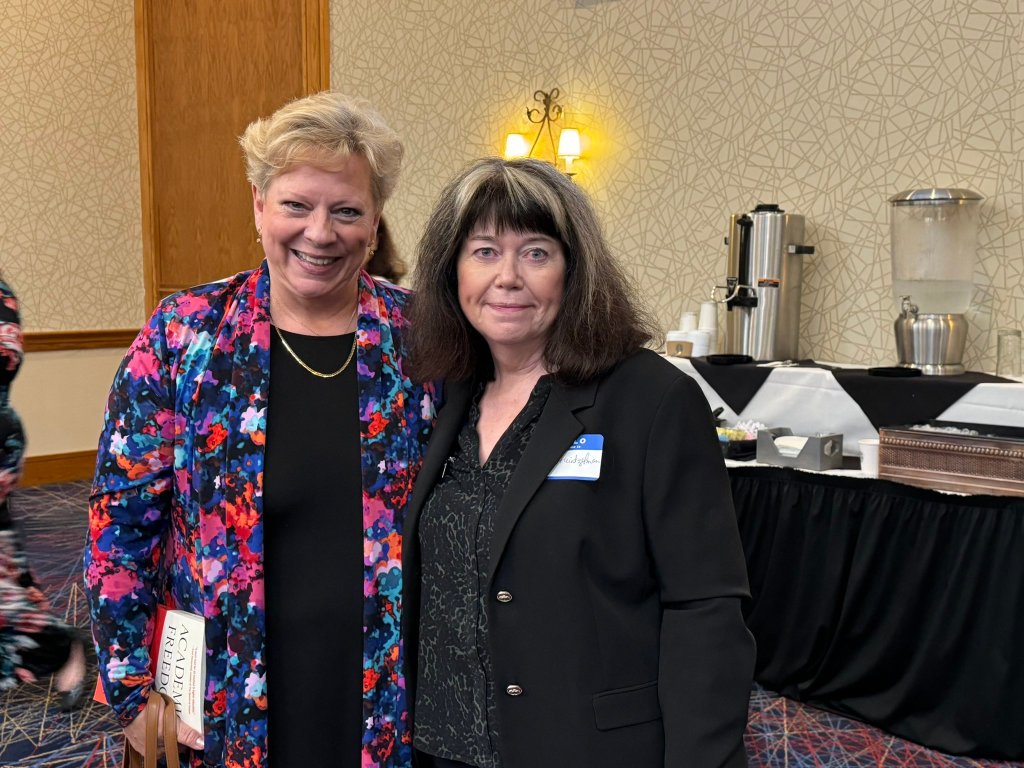
Dr. Sandra Jordan, Chief of Staff of SACSCOC, and Pat Heintzelman

UT Austin Law Professor David Rabban presenting his new book Academic Freedom: From Professional Norm to First Amendment Right.
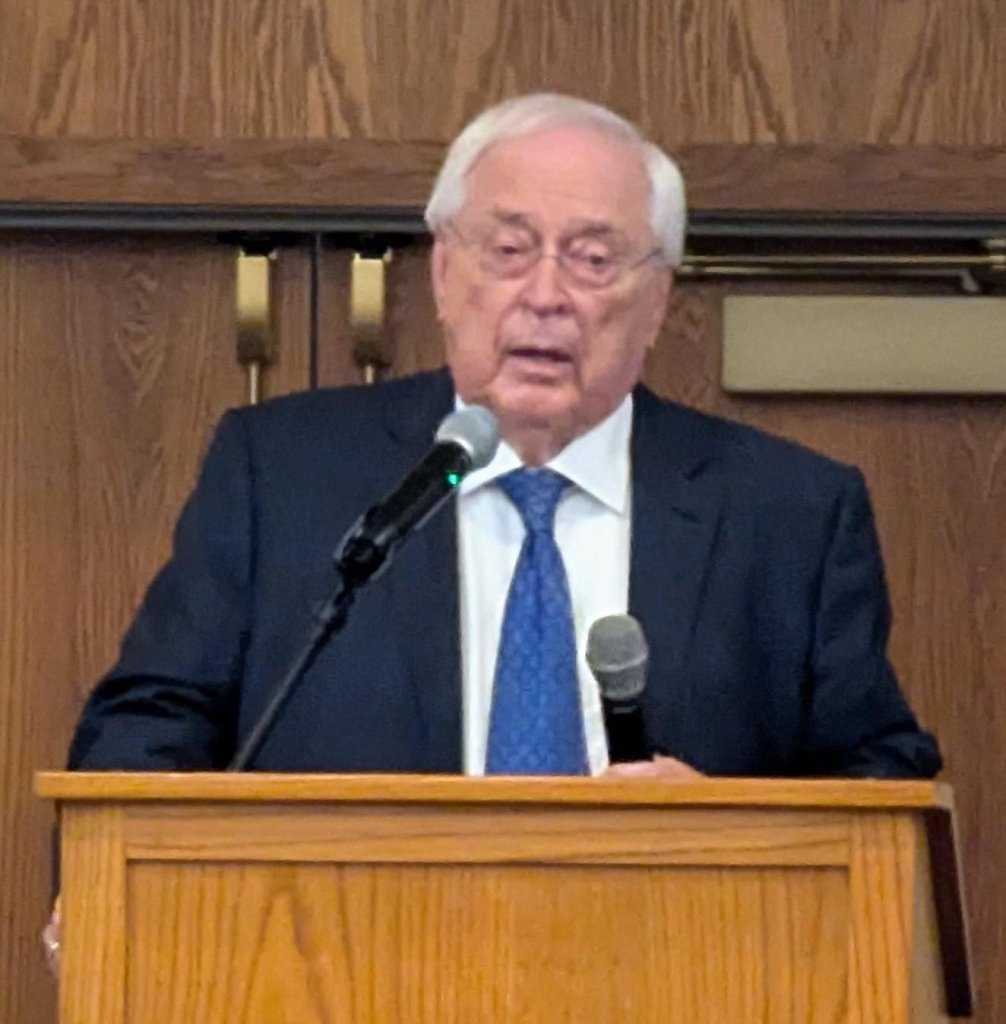
Attorney Frank Hill presenting about faculty rights and the basics of
what to expect when one contacts a lawyer about issues on campus.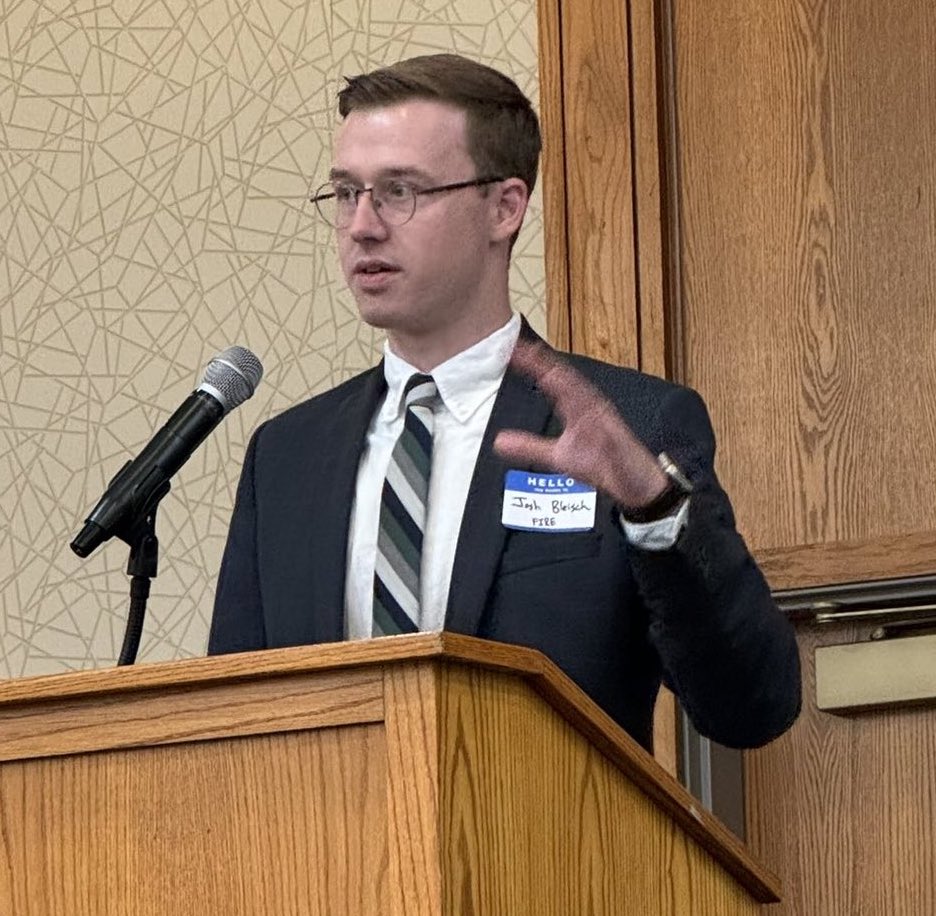
Attorney Joshua Bleisch from FIRE presenting on
Academic Freedom in the Courts.
Dr. David Albert and Lobbyist Beaman Floyd discuss the
higher education priorities in the next Texas Legislative session.
Dr. Leslie Bary, Secretary of the Louisiana AAUP Conference, asks a question during the panel on the upcoming Texas Legislative session,
Agenda
9:00 a.m. Welcome
9:30 a.m. Shared Governance panel: Donny Leo, Tony Villanueva, and Sandra Jordan
10:45 a.m. Break
11:00 a.m. Academic Freedom panel: Teresa Klein, Donny Leo, and Sandra Jordan
12:30 p.m. Lunch / Professor David Rabban to speak about his new book Academic Freedom: From Professional Norm to First Amendment Right
1:30 p.m. Faculty Rights questions for attorney Frank Hill
3:30 p.m. Break
3:45 p.m. Academic Freedom in the Courts: Joshua Bleisch, FIRE attorney
4:45 p.m. Texas Legislative Session: Beaman Floyd and David Albert
5:45 p.m. Wrap upSpeakers from all over the state and beyond are gathering to present this unique opportunity for faculty. Among the speakers:
- Dr. David Albert is the Texas AAUP-AFT Vice President for Central Texas and the Austin Community College AFT Local President. He is also a Professor of Government at ACC.
- Joshua T. Bleisch, an attorney with the Foundation for Individual Rights and Expression (FIRE), will discuss Academic Freedom in the Courts.
- Frank Hill, a higher ed employment attorney currently representing about 20 Texas faculty, will answer legal questions from attendees.
- Dr. Sandra Jordan, Chief of Staff, Southern Association of Colleges and Schools (SACS) Committee on Colleges which accredits public and private colleges and universities in Texas and beyond, will participate on the academic freedom and shared governance panels.
- Dr. Teresa Klein is the Texas AAUP-AFT Vice President and the Del Mar College AAUP Chapter President. She is also a tenured Professor of Psychology and former Faculty Senate President at Del Mar College. She is also a TFA officer.
- Donny Leo has many years of experience actively advocating for academic freedom, shared governance, tenure, and faculty rights at community colleges and universities.
- Professor David Rabban, the Dahr Jamail, Randall Hage Jamail, and Robert Lee Jamail Regents Chair in Law, Distinguished Teaching Professor at The University of Texas at Austin, will talk about his new book Academic Freedom: From Professional Norm to First Amendment Right. Prof. Rabban also served as Counsel, General Counsel, and Academic Freedom Committee Chair of the National AAUP.
- Tony Villanueva is the Texas AAUP-AFT Vice President for South Texas. He is also a tenured Professor of Psychology at Palo Alto College in San Antonio where he served as Faculty Senate President 2019-2021. He is the convener of a new AAUP-AFT chapter for Alamo Colleges, which includes Palo Alto College and four other community colleges.
About AAUP. Founded in 1915, we champion academic freedom, advance shared governance, and organize all faculty to promote economic security and quality education. Here’s a link to join and several reasons to consider joining. Membership is kept confidential. AAUP has 42,000 members and is affiliated with AFT with 1.8M members including 300,000 in higher ed. AFT is part of AFL-CIO with 12M members. Follow Texas AAUP-AFT on X @TexasAaup and @aaup_utAustin.
About TFA. We support the freedoms of all faculty and staff, and vigorously supports its members. We are stronger together and want to advocate for you! Here’s a link to join TFA and several reasons to consider joining. Membership is kept confidential. TFA is affiliated with the Texas State Teacher’s Association, which is affiliated the 3M members of the National Education Association (NEA). Follow TFA on X @TXFacultyAssoc.
-
Subscribe
Subscribed
Already have a WordPress.com account? Log in now.
 AAUP@UT